
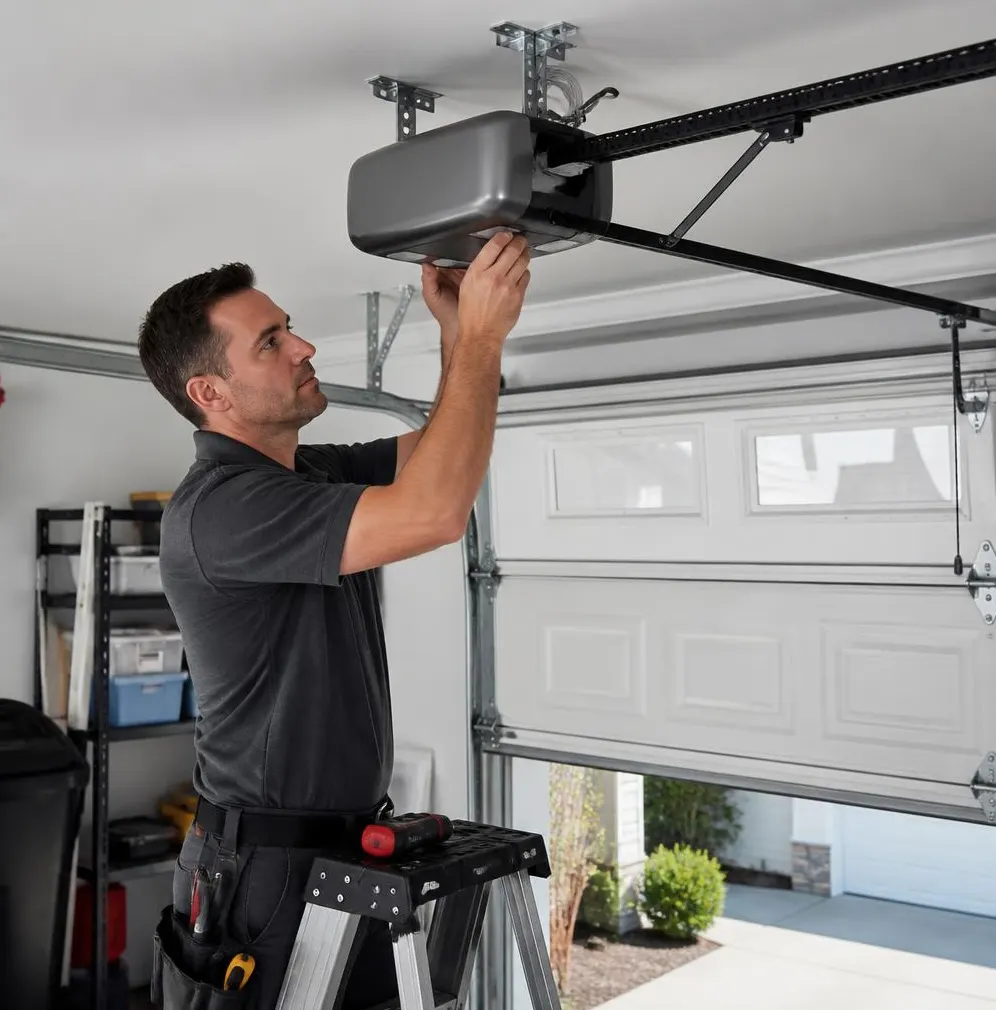
The Mistake Most Homeowners Make First
The first thing most people reach for when a garage door starts squeaking is a can of WD-40. It's sitting in the garage already, it's cheap, and it stops the noise for about a week. That's exactly why it's tempting. But WD-40 is a solvent, not a lubricant. It strips old grease off rollers and hinges, attracts dust and pine pollen, and leaves the metal drier than before you sprayed it. By the time cooler, drier fall air sets in, that "fixed" noise is often back, louder.
A real once-a-season routine takes about twenty minutes, uses tools most homeowners already own, and catches small problems before an ice storm or a hard freeze turns them into a stuck door at 6 a.m.
Tools You'll Need
- A socket wrench or adjustable wrench
- A flashlight
- Clean rags
- Garage-door-specific lithium or silicone lubricant (not WD-40, not household oil)
- A step stool
The 20-Minute Routine
- Walk the track and panels with a flashlight. Look for dents, rust spots, or built-up sap and pollen residue where pine trees sit close to the garage. Heavy rain and humidity push grit into the track, and that grit is what grinds down rollers over time.
- Wipe the tracks clean with a dry rag. Don't lubricate the track itself — rollers should glide on clean metal, not oil. A damp or sticky track is often just dirt, not a mechanical problem.
- Check and tighten visible hardware. Use your socket wrench to snug up the lag bolts on the track brackets and the bolts on the roller brackets. Vibration from daily opening and closing loosens these slowly; a quarter turn is usually all it takes.
- Lubricate the moving metal parts. Apply garage-door lubricant to the rollers (not the track), the hinges, and the torsion spring coils, just a light coat. This is the step that actually quiets the door and protects it heading into colder, drier weather when metal contracts and stiffens.
- Inspect the weatherstripping along the bottom and sides. Push on it — it should spring back, not crumble or stay flattened. Gaps here let in wind-driven rain and let humid air in that encourages swelling in wood-trim doors, a common issue after a wet summer.
- Test the auto-reverse safety feature. Place a 2x4 flat on the ground where the door closes. Close the door — it should reverse immediately on contact. If it doesn't, stop using the opener until it's checked.
- Do a manual balance test. Pull the emergency release cord to disconnect the opener, then lift the door by hand to about waist height and let go. A properly balanced door stays put. If it drifts down or slams up, the spring tension is off.
Where DIY Ends and a Technician's Job Begins
Everything above is safe for a homeowner to do with basic hand tools. What comes next is not a DIY job, and here's why:
- Torsion and extension springs are under extreme tension. Adjusting or replacing them without the right bars and training is one of the most common causes of serious garage door injuries. If your balance test failed, that's a job for spring replacement, not a wrench.
- Frayed or rusted cables can snap under load. If you see fraying on the lift cables, don't operate the door at all until a technician replaces them.
- Opener force settings and sensor alignment involve electrical components and calibration that go beyond wiping sensors off. If the auto-reverse test failed, or the opener struggles, reverses randomly, or makes grinding noises, that's opener service territory.
- Bent track sections or off-track rollers need to be realigned with proper leverage tools. Forcing a bent track back by hand usually makes it worse.
When to Call Delco Door & Opener
If your twenty-minute checkup turns up a door that won't stay balanced, cables showing wear, or an opener that doesn't reverse properly, that's the point to stop and call in a technician rather than keep testing it yourself. Our spring replacement service handles unbalanced doors safely, with the right tension bars and matched springs so the door isn't fighting itself every time it opens. If your opener is misbehaving, our garage door opener service checks the sensors, force settings, and wiring that a homeowner can't safely adjust. And if you'd rather not remember to do this every season, our preventive maintenance visits cover the full inspection — track alignment, spring tension, hardware, and opener calibration — before Columbus County's ice storms or hurricane remnants put extra strain on a door that's already due for attention.
If you're in Delco, Whiteville, Bolton, Riegelwood, Clarkton, Elizabethtown, Bladenboro, or Lake Waccamaw and your garage door needs more than a wipe-down and some lubricant, call Delco Door & Opener. We'll come out, tell you honestly what it needs, and handle it like it's our own garage.