
Start With the Simple Rule
If your garage door won't budge the morning after an ice storm, the bottom seal is probably frozen to the ground, not the opener that's broken. Columbus County doesn't see ice often, but when a hard freeze follows one of our heavy rains, water that pooled at the threshold overnight bonds the rubber seal to the concrete apron like glue. That's the most common cause by far.
The exceptions matter, though. Sometimes the seal is fine and the real issue is an opener that's gotten finicky in the cold, a spring that's lost a bit of tension overnight, or old grease on the rollers that's gone stiff. A technician checks these in a specific order because forcing the door the wrong way first can turn a five-minute fix into a torn seal, a bent track, or a stripped opener gear.
Symptoms Worth Noting Before You Call
- The door won't move at all when you hit the remote, and the opener motor sounds like it's straining
- You can see a visible ice line or frost along the bottom seal
- The door opens a few inches, stalls, then reverses on its own
- Movement is slow and jerky instead of the usual smooth glide
- A cracking or tearing sound happens right as the door breaks free
- The remote works some mornings and not others during a cold stretch
What a Technician Checks, in Order
1. Ice Bonding the Bottom Seal
This gets checked first because it's the easiest to rule in or out, and it's the most common cause after our overnight freezes. Warm — not boiling — water poured slowly along the seal line will usually break the bond without damaging the rubber. The fix beyond that morning is often a threshold or apron that doesn't drain well, letting water sit right where the door closes. Re-grading the drainage or installing a seal designed to shed water instead of trapping it solves the repeat problem.
2. Stiff or Old Lubricant on Rollers, Hinges, and Tracks
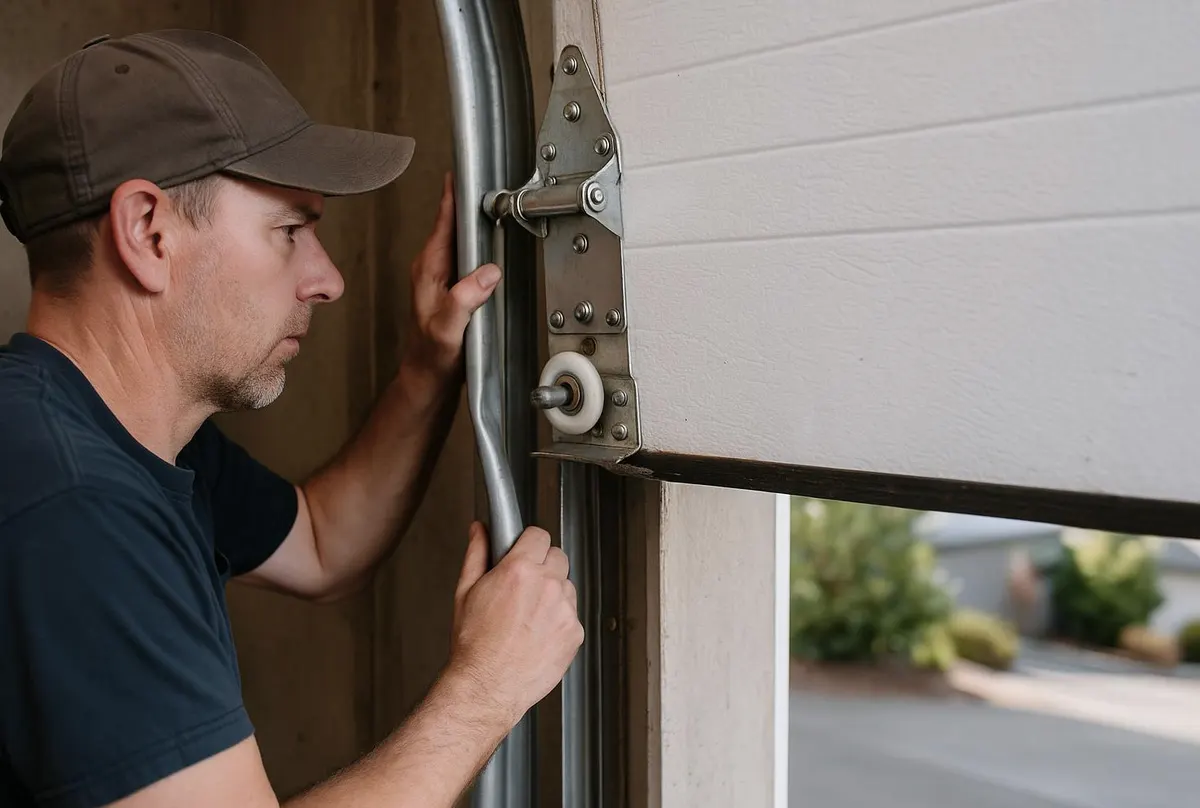
Grease that's been in place for a year or more thickens in cold temperatures and can make the whole door feel sluggish even when nothing is actually frozen. The fix is cleaning off the old buildup and reapplying a garage-door-rated lithium or silicone lubricant — not a household spray that evaporates fast and attracts dust. This is standard work during a preventive maintenance visit, and it's worth doing before winter really settles in, not after.
3. Debris and Moisture Trapped in the Tracks
With pine trees common around garages here, needles and pollen residue collect in the track channel through fall. Add humidity and a freeze, and that debris turns into a gritty ice pack that throws off the rollers' path. A technician clears the tracks and checks alignment with a level, since debris buildup over time can nudge a track slightly out of true even after the ice melts.
4. Spring Tension Shifting With Temperature
Metal contracts in the cold, and torsion springs can lose a small amount of lift overnight, especially if they're already older or showing rust from humid summers. If the door is evenly sluggish rather than stuck at one spot, this is next on the list. The fix is either an adjustment if the tension is just slightly off, or a full spring replacement if the spring shows wear, pitting, or uneven coils — cold snaps are a common trigger for a marginal spring finally giving out.
5. Opener Sensitivity in Cold Weather
Circuit boards and limit switches can drift slightly with temperature swings, which is why some doors reverse early or stop short only in winter. A battery backup unit also loses capacity in the cold, so a door that runs fine on power but fails during an outage often points here. The fix involves resetting force and limit settings and testing the backup battery under load, not just visually checking it.
6. Door Material and Moisture Absorption
Wood doors and older panels can absorb humidity through the fall and then swell slightly before a freeze locks that swelling in place, making the door drag even once the ice is gone. This shows up as a door that's sluggish everywhere, not just frozen shut at the bottom.
When to Call Delco Door & Opener
If the door is frozen solid, resist running the opener repeatedly — that's the fastest way to strip a gear or bend a track. If the sluggishness comes back every time it gets cold, that's not bad luck, it's a sign something in the list above needs attention rather than a quick fix each morning. Delco Door & Opener handles both ends of this: a Garage Door Repair visit to sort out what's actually frozen, binding, or worn, and Preventive Maintenance to re-lubricate, re-balance, and clear tracks before the next freeze hits.
If your garage door is fighting you every cold morning, give Delco Door & Opener a call — we serve Delco, Whiteville, Bolton, Riegelwood, Clarkton, Elizabethtown, Bladenboro, and Lake Waccamaw, and we'll get it moving smoothly again before winter settles in for good.